When the Table Goes Quiet: The Unraveling of Sunday Dinner in the South
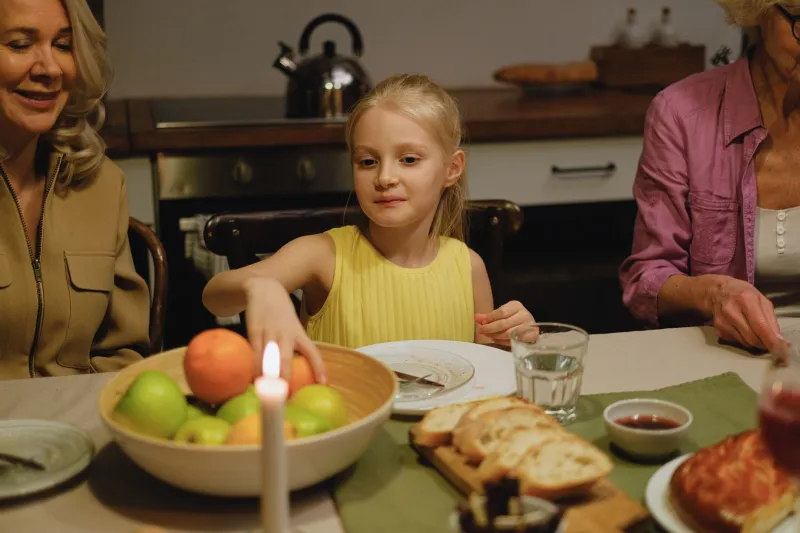
There's a particular kind of quiet that settles over a Southern kitchen on a Sunday afternoon. The smell of pot roast or fried chicken hanging in the air. The screen door banging open and shut as cousins pile in from the yard. Somebody's grandmother already stationed at the stove before the rest of the household has finished getting dressed for church. For a very long time, that scene played out in millions of homes across the South, week after week, as reliable as the sunrise.
It's playing out in fewer of them now.
The Sunday supper — that sprawling, multi-generational, pass-the-cornbread ritual that once functioned as the social and emotional backbone of Southern family life — is fading. Not all at once, and not everywhere. But the erosion is real, and the people who study Southern culture, along with the families living it, are starting to feel the weight of what's disappearing.
More Than Just a Meal
To understand what's at stake, you have to understand what Sunday dinner actually was — and what it was never just about food.
"The Sunday table was a technology for keeping families intact," says Dr. Miriam Calloway, a cultural historian at the University of Georgia who has spent two decades studying foodways across the rural South. "It was the mechanism through which stories got told, recipes got transferred, relationships got repaired. You showed up every Sunday not just because you were hungry, but because not showing up meant something."
In communities across Alabama, Mississippi, the Carolinas, and Tennessee, Sunday dinner functioned as an informal family parliament. Disputes got aired. Engagements got announced. Grandchildren met great-aunts they'd otherwise never know. The food itself — the slow-cooked collard greens, the hand-rolled biscuits, the chess pie cooling on the windowsill — was the common language everyone already spoke.
"My grandmother could tell you exactly what each person at that table liked and didn't like," recalls Darnell Simmons, 58, who grew up in rural Georgia and now lives in Atlanta. "She'd been feeding the same people for forty years. That meal was her way of saying, I know you. I see you. You belong here."
The Forces Pulling Families Away
So what changed? Quite a lot, as it turns out — and most of it didn't happen overnight.
The structural shifts are familiar enough: the rise of two-income households, suburban sprawl pulling extended families further apart, the collapse of the shared church schedule that once anchored Sunday mornings and, by extension, Sunday afternoons. Add in the creep of youth sports leagues that now run straight through the weekend, the algorithmic pull of screens, and the general acceleration of American life, and the Sunday table starts to look like a casualty of a dozen different forces converging at once.
"We tend to romanticize the past and forget how much labor the Sunday dinner required," notes Dr. Lena Forsyth, a sociologist at Vanderbilt University who has studied food rituals and family cohesion across the American South. "Somebody had to cook that food, and for most of Southern history, that somebody was a woman who had very little say in the matter. The tradition carried real costs that we don't always account for when we mourn its passing."
That's a fair and necessary complication. The Sunday supper, for all its warmth, was built on an unequal division of labor. As Southern women entered the workforce in greater numbers and began pushing back against the expectation that they would anchor every family gathering from the kitchen, the tradition began to shift — sometimes quietly, sometimes with friction.
But many of the women who once anchored those tables say the loss still stings, even when they're the ones who stepped back.
"I stopped doing it the way my mother did when my kids were in high school," says Patricia Mouton, 67, of Lafayette, Louisiana. "Life just wouldn't cooperate anymore. But I'll tell you, I still feel the absence of it. Every single Sunday."
What Disappears with the Dinner
When sociologists and historians talk about what gets lost when the Sunday table empties, they're not just talking about recipes, though those matter enormously. They're talking about the transmission of something harder to name.
Oral history. Family lore. The particular way a grandfather salts his field peas, or the story behind why your family always puts hot sauce on their scrambled eggs. These things don't survive in cookbooks. They survive in rooms full of people eating together, year after year, until the knowledge becomes part of who you are.
"Food is how Southern families have always passed down identity," Dr. Calloway says. "When the gathering stops, the transmission stops. And once a generation misses it, you can't always get it back."
The implications reach beyond the sentimental. Research consistently links regular family meals to stronger social bonds, better mental health outcomes in children and adolescents, and greater intergenerational connection. The Sunday dinner, in its heyday, was essentially a weekly investment in all of those things — and it was largely invisible as such because it was just what you did.
The Tables That Are Holding On
Here's the thing, though: the tradition isn't dead. Not yet, and maybe not ever entirely.
In pockets across the South, families and communities are actively, deliberately keeping the Sunday table alive — sometimes by adapting it, sometimes by doubling down on the original form with a kind of fierce intentionality.
In Oxford, Mississippi, a neighborhood group of about a dozen families rotates hosting duties for a Sunday potluck every two or three weeks, combining their different culinary backgrounds into a meal that looks nothing like any one family's tradition but feels, participants say, deeply familiar. "It's the spirit of it that matters," says one organizer. "The slowing down. The sitting together."
In Charlotte, a multi-generational Black family has made a point of keeping their Sunday dinner intact across three households — grandparents, adult children, and grandchildren — by building it into their schedules the way you'd build in any other non-negotiable commitment. "We put it on the calendar," says the family's matriarch, Ruby Jean Harris, 74. "It's not optional. It's family."
Churches across the South, long the institutional backbone of the Sunday meal tradition, are also finding new ways to hold the gathering together — fellowship dinners, community suppers, events that recreate the table for people who may not have one at home.
A Tradition Worth Fighting For
There's no simple answer to what it would take to bring the Sunday dinner back at scale. The forces working against it are structural, cultural, and deeply entangled with the realities of modern American life. Nobody's going back to an era that, for all its warmth, came with its own injustices and limitations.
But the argument for preserving the spirit of the Sunday table — the intention, the gathering, the shared food and shared time — feels as urgent as ever. Because what the tradition offered, at its best, wasn't a particular menu or a particular set of customs. It was a weekly reminder that the people at the table mattered to each other.
In a South — and a country — that feels increasingly fragmented, that reminder might be exactly what we can least afford to lose.
Pull up a chair. Pass the biscuits. The table's still worth setting.