The Tools That Season a Kitchen: How Southern Cooks Pass Down More Than Recipes
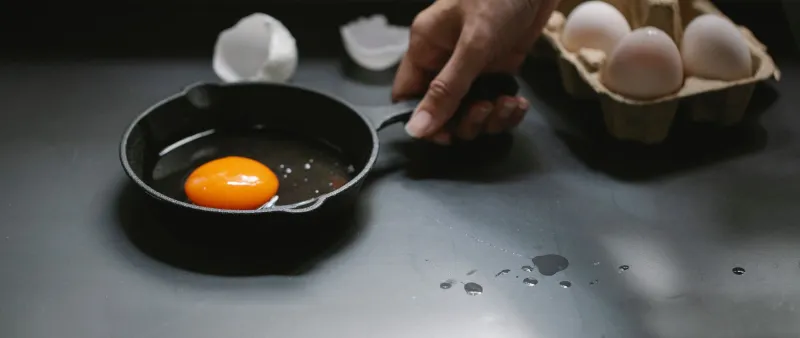
Walk into most Southern kitchens and you'll notice something right away. It's not the smell of cornbread—though that's usually there too—it's the weight of everything. The heavy skillet sitting on the back burner. The deep, dark pot resting on the stove like it owns the place. The wedge-shaped cornbread pan hanging on a nail by the window. These aren't decorative. They're working tools, and in many families, they've been working for generations.
In the South, kitchen equipment isn't something you replace when it gets old. It's something you inherit when someone decides you've earned it.
The Skillet Comes First
Ask any serious Southern cook what they couldn't live without and the answer is almost always the same: a well-seasoned cast iron skillet. Not a new one, either. A broken-in one. The kind with a surface so smooth it looks almost wet, built up over decades of frying chicken, searing pork chops, and baking cornbread at high heat.
Gloria Tatum, a 74-year-old home cook from Gadsden, Alabama, has been cooking on the same skillet her mother left her since 1987. "It was already old when I got it," she says, laughing. "My mother got it from her aunt. So we don't even really know how old it is. But I can tell you this—nothing I've ever bought at a store cooks like that skillet does."
That's not just sentiment talking. Cast iron holds and distributes heat in a way that most modern cookware simply can't replicate. When you pour cornbread batter into a preheated cast iron pan, the edges start cooking the second they hit the surface. You get that crisp, dark crust that defines a proper Southern cornbread. Nonstick pans don't do that. Stainless steel doesn't do that. Cast iron does.
The seasoning—that built-up layer of polymerized oil that gives the skillet its near-nonstick surface—is essentially a record of every meal that's ever been cooked in it. Some cooks are almost superstitious about it. "You don't wash it with soap," Gloria says firmly. "You just don't. Hot water, a brush, dry it on the stove. That's it."
Dutch Ovens and the Long, Slow Cook
If the skillet is the workhorse of everyday Southern cooking, the Dutch oven is the vessel for the long haul. Braised short ribs. A pot of red beans that's been going since morning. Chicken and dumplings simmering low and slow on a cold December afternoon. These are Dutch oven dishes, and the pot itself is part of what makes them work.
The thick walls and tight-fitting lid create an environment that traps moisture and keeps heat remarkably even. That's exactly what you need when you're cooking dried beans for three hours or breaking down a tough cut of pork shoulder into something that falls apart with a fork.
Robert Simms, who runs a small barbecue catering operation out of Meridian, Mississippi, grew up watching his grandmother use her enameled cast iron Dutch oven for everything from gumbo to peach cobbler. "She'd put that pot on in the morning and by lunchtime the whole house smelled like something worth sitting down for," he recalls. "When she passed, my aunt got the house and my uncle got the truck. I asked for the pot. People thought I was crazy."
He's not crazy. He's Southern.
The Cornbread Pan: A Geometry of Tradition
There's one piece of equipment that's almost exclusively a Southern thing, and it's the cast iron cornbread stick pan—sometimes called a corn stick pan or a cornbread mold. These pans are cast in the shape of individual corn cobs, producing small, ridged sticks of cornbread with maximum crust surface area.
They're fussy. They require serious preheating. They need to be greased with bacon drippings or lard, not butter, or the batter sticks. But the result—crispy on every side, tender in the middle—is something you genuinely can't get from a standard square pan or a muffin tin.
These pans are also notoriously hard to find in good condition. The older ones, made before the 1960s, have a finer grain than most modern cast iron and produce a smoother surface. Finding one at an estate sale or a flea market in the rural South is considered a genuine score.
Patricia Heard, a food historian based in Natchez, Mississippi, has spent years documenting Southern foodways and the tools that shape them. "People focus on recipes, and that makes sense," she says. "But the equipment is really where a lot of regional identity lives. A cornbread stick pan isn't just a pan. It's a statement about how you think cornbread should be eaten."
What Gets Passed Down—and Why
The passing of kitchen tools in Southern families is rarely formal. It's not usually written into wills, though sometimes it is. More often it happens in kitchens, during ordinary moments. A grandmother hands a skillet across the counter. A mother sends a Dutch oven home with a daughter after Thanksgiving. A father teaches his son to reseason a pan that's gotten rusty from neglect, walking him through the process like a rite of passage.
These transfers carry weight because the tools themselves carry history. They've been present at thousands of meals. They've fed people through grief and celebration. They've been used to cook for new babies and for funerals. That's not something you can buy at a kitchen supply store.
Gloria puts it simply: "When I cook in that skillet, I feel like my mother's in the kitchen with me. I know that sounds like something people say. But I really mean it."
Caring for What You've Been Given
Owning heirloom cookware comes with responsibility. Cast iron that isn't properly maintained will rust. Enamel chips if you're rough with it. These tools require attention, and the rules—while mostly unwritten—are taken seriously.
For cast iron, the basics are: dry it thoroughly after washing, heat it briefly on the stove to make sure no moisture remains, and rub it lightly with a neutral oil before storing. If rust appears, it's not the end. A good scrub, a thorough drying, and a few rounds of oven seasoning will bring most pieces back to life.
Robert has reseasoned pans for neighbors and friends who've inherited cast iron in rough shape. "It's like restoring something," he says. "You're not just fixing a pan. You're keeping something going that somebody cared about."
The Equipment Is the Recipe
In Southern cooking, technique and tool are inseparable. The reason a skillet-fried chicken tastes different from a deep-fryer version isn't just the oil or the temperature—it's the pan. The reason a slow-cooked pot of beans has a depth that a quick stovetop version doesn't is partly the Dutch oven and the way it holds heat over time.
You can follow a recipe exactly and still miss something if you're using the wrong vessel. That's not gatekeeping. That's just physics, and a little bit of magic that comes from cooking in something that's been doing this work for a very long time.
The tools of a Southern kitchen are more than functional objects. They're the reason certain flavors exist at all—and the reason those flavors keep showing up, generation after generation, on tables all across the South.