Consider Yourself Warned: The Unofficial Rules of Eating at a Southern Table
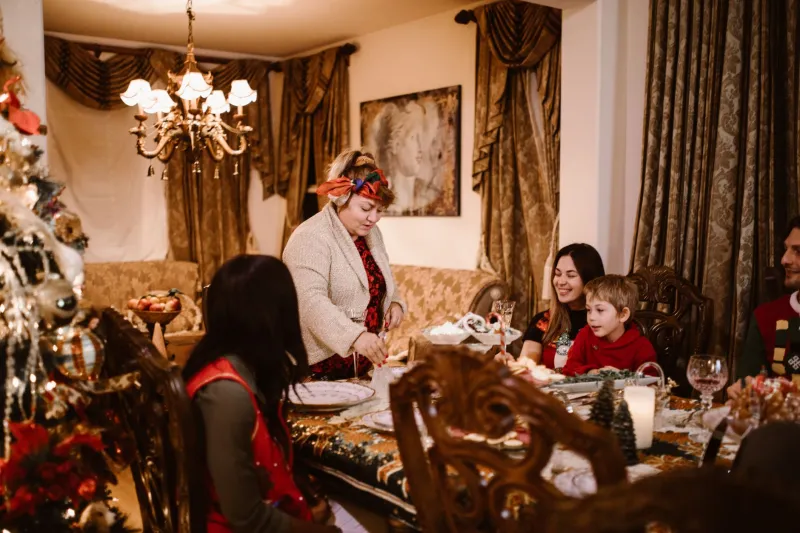
Let's say a Southern family invites you to Sunday dinner. You're delighted. You show up on time — maybe even a few minutes early, because where you come from, punctuality is polite. You bring a bottle of wine because that's what you'd bring anywhere else. You sit down when you're told to sit down. You wait to be served.
And somehow, despite doing everything technically right, you've already made four mistakes.
Don't feel bad. Southern hospitality is one of the most genuinely warm traditions in American life, but it runs on an elaborate set of unspoken customs that visitors from other regions frequently stumble through without ever knowing what hit them. Consider this your field guide.
Arriving Early Is Not a Compliment
Let's start with that punctuality thing. In most American professional contexts, showing up a few minutes early signals respect. At a Southern dinner, it signals that you have no idea how a kitchen works.
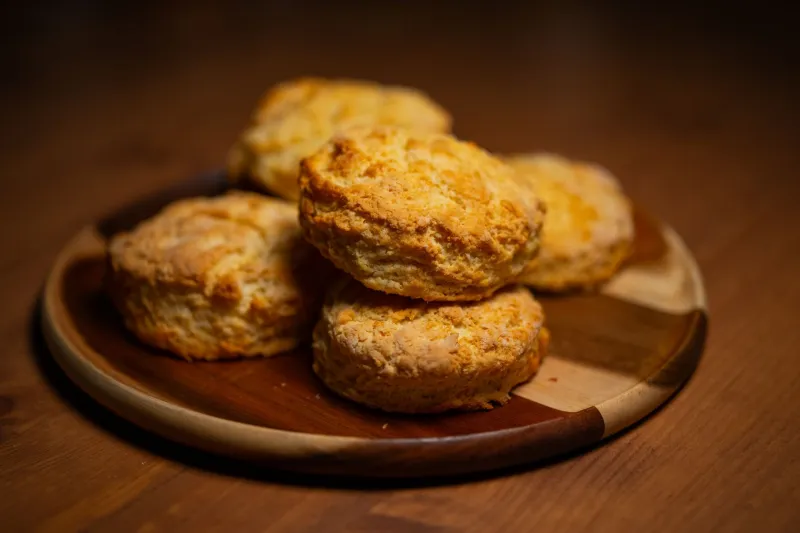
The hostess is not ready for you. She's got a pot on the stove, a casserole in the oven, and biscuits that need another eight minutes. Your early arrival means she now has to stop what she's doing, dry her hands, compose herself, and greet you graciously — which she absolutely will, because that's who she is — while internally recalculating the entire timeline of the meal.
The correct arrival window is five to ten minutes after the stated time. This is not rudeness. This is consideration. Learn the difference.
The Casserole Is Not Optional
If you're invited to a gathering where guests are asked to bring a dish, you bring a dish. This is not a suggestion. This is not the kind of situation where you can show up with a store-bought rotisserie chicken and call it a contribution.
Furthermore, what you bring communicates something about you. A green bean casserole made from scratch signals that you respect the occasion. A bag of chips does not.
The casserole also serves a secondary function: it will be discussed. People will ask what's in it. They will compliment it — or conspicuously not compliment it, which is its own message. They will ask if you'd be willing to share the recipe, which is the highest honor available in this particular context. Be ready to give it freely. Hoarding recipes is considered, in certain circles, nearly unforgivable.
Sweet Tea Is Not a Beverage Choice. It Is a Worldview.
When someone in the South asks if you'd like sweet tea, the correct answer is yes — even if you don't particularly like sweet tea. Declining is fine, of course, but declining while making a face or launching into a commentary about sugar content will not endear you to anyone in the room.
Sweet tea in the South is made with real sugar dissolved into hot tea before it's chilled, which creates a different product entirely from iced tea with sugar stirred in afterward. This distinction matters enormously to the people who care about it, and those people are legion.
If you're offered unsweet tea and you actually wanted sweet, you can ask for some sugar on the side. Just know that adding sugar to already-cold tea and expecting it to dissolve properly is a fool's errand, and the look you'll receive from the person who made the sweet tea will convey this without a single word being spoken.
How to Compliment the Food (and How Not To)
This is where a lot of outsiders go sideways. Complimenting the food at a Southern table is mandatory and expected — but there are wrong ways to do it.
Saying "This is amazing" is fine but generic. Saying "This reminds me of my grandmother's cooking" is excellent. Saying "This is better than my grandmother's cooking" is dangerous territory unless you're absolutely certain your grandmother is not related to anyone at the table.
Never, under any circumstances, say something is "interesting." In Southern food culture, "interesting" is not a compliment. It is a polite container for something negative, and everyone knows it.
Also: compliment the cook directly, not the food in the abstract. "This cornbread is incredible" is good. Looking at the cornbread and saying "somebody really knows what they're doing" is better. Walking into the kitchen to tell the person who made it, in person, that it was the best thing you've eaten in recent memory — that's the gold standard.
The Second Helping Situation
You will be offered a second helping. You should take it. Declining a second helping when food is being pressed upon you reads, in Southern body language, as a polite way of saying you didn't enjoy the first one.
The proper way to decline, if you genuinely cannot eat another bite, is to say "I would love to but I just couldn't," while touching your midsection in a way that communicates fullness, and then — crucially — following it with an additional compliment about the specific dish being offered. "I would love more of that squash casserole but I truly couldn't fit another bite" is gracious. "No thanks" is a social misstep.
Blessing the Meal
If someone bows their head before eating, you bow yours too. It doesn't matter what you do or don't believe. This is not a theological moment for you. It is a moment of respect for the people around the table. You bow your head, you wait, and when it's over, you eat.
If you're asked to say the blessing and you weren't expecting it, don't panic. Keep it short. Express gratitude for the food and the people. End with "Amen." You will receive warm looks from everyone at the table.
The Leaving Problem
Leaving a Southern dinner is a process, not an event. You cannot simply say "Well, we should probably get going" and be out the door in five minutes. What follows that statement is at least twenty minutes of conversation in the living room, another ten minutes on the porch, and a final five minutes in the driveway during which several important things will be said that couldn't apparently be said inside.
This is not inefficiency. This is how Southern people close out a good evening — gradually, warmly, reluctantly. If you try to shortcut it, you'll succeed only in seeming like you're in a hurry, which will make everyone feel slightly bad about the time they took to feed you.
Plan accordingly.
What All of This Actually Means
Here's the thing about all these customs and unspoken rules: they're not really about etiquette. They're about care. Southern table culture developed in a tradition where feeding people was one of the primary ways love got expressed — where the effort that went into a meal was a direct measure of how much the people eating it were valued.
When someone presses a second helping on you, they're saying you matter to me. When the leaving takes forever, it's because nobody actually wants the evening to end. When the sweet tea arrives before you've even asked for a drink, it means someone was already thinking about you before you walked through the door.
Once you understand that, the rulebook starts to make a lot more sense.