Flour, Fat, and Family: The Secrets Behind a True Southern Biscuit
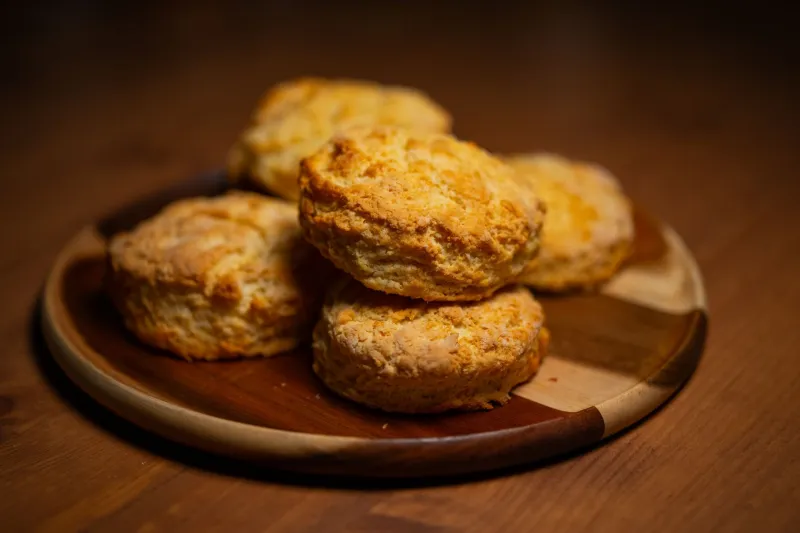
Walk into any trendy brunch spot in Nashville or Charleston these days and you'll find biscuits on the menu. They'll be described with words like "housemade," "laminated," or "locally sourced." They might come stacked three inches high with hot honey drizzled over the top. They'll probably cost you eight dollars. And nine times out of ten, they'll be fine — maybe even pretty good — but they won't be right.
Something gets lost when biscuit-making moves out of a home kitchen and into a commercial operation. Call it instinct. Call it muscle memory. Call it the particular way a woman who's made biscuits every Sunday for fifty years knows exactly when the dough has been worked enough and not a second more. Whatever it is, it doesn't transfer easily — and the people who understand that best are the ones still making biscuits the old way.
We spent time with three families across the South whose biscuit traditions span generations, and what we learned goes way beyond technique.
Why Biscuits Mean More Than Bread
In most parts of the world, bread is sustenance. In the South, biscuits are a love language.
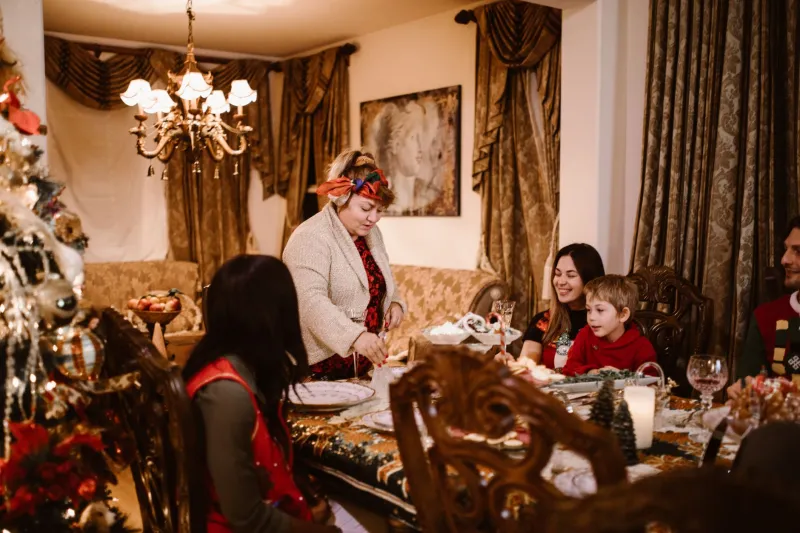
"My grandmother made biscuits every single morning," says Dolores Whitfield, 67, of Meridian, Mississippi, whose family recipe dates back at least four generations. "It wasn't a special occasion thing. It was just what you did. You got up, you made biscuits, and the family came to the table. That was the whole point — getting everybody to the table."
That idea — biscuits as a gathering force — comes up again and again when you talk to people who grew up with them. They're not a side dish. They're an invitation. And the act of making them, with all its particular rituals and unspoken rules, is a form of hospitality that no recipe card fully captures.
"You can write down the ingredients," says James Earl Pruitt, a retired farmer from eastern Tennessee whose wife, Cora, still makes biscuits by hand at age 79. "But you can't write down the feel of it. Cora knows when the dough's ready by how it sits in her hands. That took years to learn."
The Buttermilk Question
Ask any serious Southern biscuit maker what separates a real biscuit from an impostor and the answer comes fast: real buttermilk.
Not the cultured stuff you grab off a grocery shelf — though that'll do in a pinch — but the old-fashioned, slightly tangy, naturally fermented liquid left behind after churning butter. True traditional buttermilk is increasingly hard to find, which is part of why the biscuits of fifty years ago tasted different from the ones we make today.
"The acidity in real buttermilk reacts with the leavening in a way that creates this lightness you can't fake," explains Rhonda Calloway, a culinary historian based in Athens, Georgia, who has spent years documenting Appalachian foodways. "When people switched to commercial buttermilk — and then some folks started using milk with a splash of vinegar — you started losing that texture. The biscuit got a little tougher, a little denser."
The fat matters just as much. Lard — rendered pork fat — was the original shortening of choice, and many old-timers insist there's simply no substitute. Crisco changed everything when it hit the market in the early 20th century, offering a shelf-stable alternative that most households eventually adopted. Today, some bakers are circling back to lard, and the results speak for themselves.
Three Recipes Worth Mastering
Dolores Whitfield's Drop Biscuits
Makes about 12 biscuits
These are the biscuits of weekday mornings — no rolling, no cutting, just drop and go.
- 2 cups all-purpose flour (White Lily if you can get it)
- 1 tablespoon baking powder
- 1 teaspoon salt
- ¼ teaspoon baking soda
- ⅓ cup cold lard or unsalted butter, cut into small pieces
- 1 cup cold buttermilk
Preheat your oven to 450°F. Whisk together the dry ingredients, then cut in the fat until the mixture looks like rough crumbs — don't overwork it. Stir in the buttermilk just until the dough comes together. Drop by heaping spoonfuls onto a lightly greased baking sheet and bake 12 to 14 minutes until golden. Brush with melted butter straight out of the oven.
Dolores's tip: "Cold everything. Cold bowl if you can manage it. Heat is the enemy until that oven door closes."
Cora Pruitt's Rolled Biscuits
Makes about 16 biscuits
These are Sunday biscuits — the ones worth the extra effort.
- 3 cups self-rising flour
- 1 tablespoon sugar
- ½ cup cold lard
- 1 to 1¼ cups cold buttermilk
Preheat oven to 475°F. Work the lard into the flour and sugar with your fingertips until it's pebbly. Add buttermilk gradually, mixing with a fork, until the dough just holds together. Turn onto a floured surface and fold the dough over itself four or five times — this creates layers. Pat to ¾-inch thickness and cut with a floured biscuit cutter. Place in a cast-iron skillet with sides touching (they rise better that way) and bake 10 to 12 minutes.
James Earl's note: "Cora says never twist the cutter. Press straight down and lift straight up, or the sides seal and they won't rise right."
Rhonda Calloway's Appalachian Sour Milk Biscuits
Makes about 10 biscuits
A nod to the pre-refrigeration era, when biscuits were made with whatever milk was on hand.
- 2 cups all-purpose flour
- 2 teaspoons baking powder
- ½ teaspoon baking soda
- ¾ teaspoon salt
- 6 tablespoons cold unsalted butter
- ¾ cup whole milk mixed with 1 tablespoon apple cider vinegar (let sit 5 minutes)
Preheat oven to 450°F. Combine dry ingredients. Cut in butter until crumbly. Add the soured milk and stir gently. Pat and fold on a floured surface, then cut and bake on a parchment-lined sheet for 11 to 13 minutes.
What the Bakeries Are Missing
None of this is to say that good biscuits can't come out of a restaurant kitchen. They can, and sometimes they do. But the thing that makes a grandmother's biscuit different isn't a technique that can be scaled up or standardized. It's the accumulated knowledge of someone who has made the same thing hundreds of times, in the same kitchen, for the same people.
There's no shortcut for that. There's no trending ingredient that replicates it. The best biscuit you'll ever eat probably won't come with a menu description. It'll just appear on the table, wrapped in a dish towel to keep it warm, and someone will say "help yourself" like it's nothing — because for them, it is. It's just Tuesday.