Rooted and Real: Five Southern Makers Bringing Old Flavors Back to Life
The South has always had a complicated relationship with its own food history. On one hand, there's deep pride in regional flavors — the slow-smoked meats, the heirloom field peas, the pepper sauces passed down like heirlooms. On the other, decades of industrialized agriculture and convenience culture nearly erased a lot of what made Southern ingredients distinctive in the first place.
But spend any time talking to the people profiled below, and you start to feel genuinely hopeful. These five producers — spread across five different states, working in five different food categories — are proof that the flavors worth saving are still very much findable. You just have to know where to look.
1. Riverview Heritage Pork — Edgefield, South Carolina
The Producer: Marcus and Denise Holloway have been raising Ossabaw Island hogs on their family's 200-acre property for going on twelve years. The Ossabaw is a breed descended from pigs brought to the Georgia coast by Spanish explorers in the 16th century — a genuinely ancient animal that nearly disappeared from American farms entirely.
Their Story: Marcus grew up on this land watching his grandfather raise mixed-breed hogs the old way — pasture-raised, slow-growing, finished on acorns and surplus garden vegetables. When commodity pork took over and the economics stopped making sense, most of the family's neighbors switched to other crops or sold out entirely. Marcus went to work in construction for fifteen years before coming back to try something different.
"I wanted to raise the kind of pork my grandfather talked about," he says. "Not the kind that's been engineered to grow fast and stay lean. The kind with actual flavor in the fat."
Ossabaw hogs take nearly twice as long to reach market weight as commercial breeds, and their meat is richer, darker, and dramatically more flavorful because of it.
Signature Dish: Slow-braised Ossabaw shoulder with sorghum and apple cider, served over stone-ground grits. The fat in this pork renders into something almost buttery, and the long braise turns the whole thing impossibly tender.
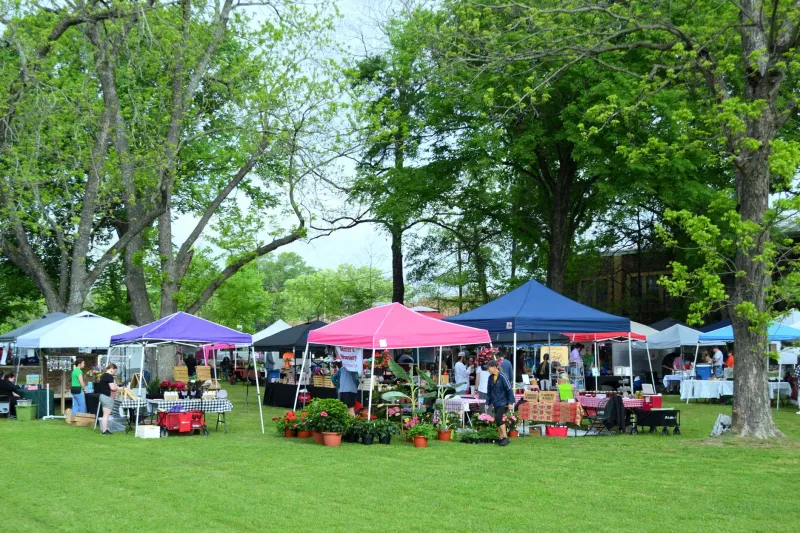
Where to Find Them: riverviewheritagepork.com (ships nationwide; also available at select Columbia, SC farmers markets)
2. Crooked Creek Hot Sauce — Natchitoches, Louisiana
The Producer: Sylvia Tureaud, a former school librarian, started making pepper sauce in her backyard in 2018 using cayenne peppers grown from seeds her great-aunt had saved for decades.
Their Story: Sylvia's family has deep roots in Creole foodways, and she grew up understanding that hot sauce wasn't a condiment — it was a flavor foundation. "Every dish started with pepper sauce," she says. "Store-bought was fine, but it wasn't ours." When her great-aunt passed and left her a mason jar of saved seeds, Sylvia planted them on a whim. The crop was so abundant that she started fermenting and bottling, and within a year, local restaurants were calling.
Crooked Creek's flagship sauce ferments for a minimum of six months, producing a complex, vinegary heat that's nothing like the one-note burn of mass-market hot sauces.
Signature Dish: Boiled Gulf shrimp tossed with Crooked Creek original and a squeeze of lemon, served over white rice. Simple, spicy, and exactly right.
Where to Find Them: crookedcreekhotsauce.com (ships nationwide; available at specialty grocers across Louisiana and Mississippi)
3. Blevins Mill — Wytheville, Virginia
The Producer: Fourth-generation miller Thomas Blevins operates a water-powered grist mill that has been in his family since 1921, producing small-batch stone-ground cornmeal, grits, and whole wheat flour.
Their Story: Thomas almost sold the mill in 2011. Maintenance costs were climbing, the old machinery kept breaking down, and the economics of small-scale milling had never been harder. What changed his mind was a letter from a chef in Richmond who had tracked down a bag of Blevins cornmeal at a country store and wanted to know if he could order more.
"That letter reminded me what this place was," Thomas says. "People were out there looking for this. I just had to make it easier to find."
Blevins Mill uses open-pollinated heirloom corn varieties — some sourced from seed banks, others grown by neighboring farmers — and mills in small batches to preserve the natural oils that give stone-ground meal its distinctive flavor and shorter shelf life.
Signature Dish: Skillet cornbread made with Blevins medium-grind cornmeal, baked in a well-seasoned cast-iron pan with bacon drippings. The flavor is nuttier and more complex than anything made with commercial cornmeal.
Where to Find Them: blevinsmill.com (ships within the US; available at several Virginia specialty food shops)
4. Sunnyside Sorghum — Harlan County, Kentucky
The Producer: The Combs family has been pressing and cooking sorghum syrup on their mountain farm for three generations. Matriarch Pearl Combs, 74, still oversees every batch.
Their Story: Sorghum syrup — made from the pressed juice of sorghum cane, cooked down over a wood fire — was once a staple sweetener across Appalachia. It's tangy, slightly smoky, and nothing like molasses despite what a lot of people assume. Pearl learned the process from her mother-in-law and has been teaching it to her grandchildren ever since, though she's quick to note that the knowledge takes years to fully absorb.
"The cooking is the hard part," she explains. "Too hot and it scorches. Not hot enough and it won't set right. You have to watch it the whole time."
Sunnyside's sorghum is available in three grades — light, medium, and dark — each with a distinct flavor profile.
Signature Dish: Sorghum-glazed roasted sweet potatoes with a pinch of sea salt and crushed pecans. The syrup caramelizes beautifully and adds a depth that plain brown sugar simply can't match.
Where to Find Them: sunnysidekysorghum.com (ships nationwide; available at Appalachian food festivals throughout the year)
5. Tarleton Pecan Farm — Albany, Georgia
The Producer: Brothers Darnell and Keith Tarleton grow and process five varieties of native Georgia pecans on 300 acres their family has farmed since the 1940s.
Their Story: Albany sits in the heart of Georgia's pecan belt, and the Tarleton operation is one of the last family-scale farms in the region that processes its own nuts rather than selling them to commercial shellers. They offer raw pecans, roasted varieties, and a small-batch pecan oil that has quietly become a secret weapon for chefs who've discovered it.
"Our grandfather always said the pecan was the most Southern thing there was," Darnell says. "It grows here naturally. It's been part of this food for centuries. We just try not to mess it up."
Signature Dish: Pecan oil-dressed butter lettuce salad with sliced peaches, crumbled goat cheese, and toasted pecan halves. The oil adds a rich, nutty base note that elevates every ingredient around it.
Where to Find Them: tarletonpecans.com (ships nationwide; available at the Albany Georgia Farmers Market seasonally)
What connects all five of these producers, beyond their obvious dedication to quality, is a shared belief that the ingredients themselves tell a story — and that story is worth protecting. The South's food culture didn't emerge from nowhere. It came from specific seeds, specific animals, specific techniques developed by specific people in specific places. Every jar of Sylvia's pepper sauce and every bag of Thomas's cornmeal is a small act of preservation.
That's worth a few extra dollars. And it's absolutely worth seeking out.