From the Back of the Garden: How Southern Cooks Are Falling Back in Love with Forgotten Vegetables
There's a corner of every old Southern garden that doesn't get talked about much anymore. It's where the sallet greens grew wild along the fence line, where somebody's grandmother bent down every spring to harvest lamb's quarters before the rest of the family was even out of bed. It's where cushaws and candy roasters sat heavy on the vine, where purple hull peas and October beans climbed whatever they could find. For a while, that corner got paved over — figuratively, anyway — by convenience, by commodity agriculture, and by a food culture that decided a handful of mainstream vegetables were enough.
But something is shifting. Across the South, a growing number of cooks — both professional and home-based — are heading back to that forgotten corner of the garden, and they're bringing real curiosity with them.
More Than a Frying Pan
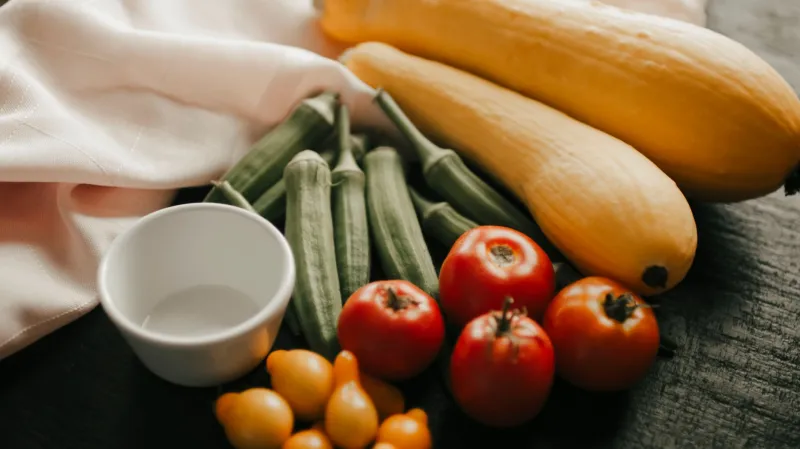
Ask most people about okra in the South and they'll tell you about the fryer. Golden, cornmeal-crusted, salted right out of the oil — it's a classic for a reason. But okra has a whole other life that got quietly buried under that reputation, and cooks are starting to uncover it.
In Asheville, North Carolina, chef and farmer Dani Lassiter has been roasting whole okra pods at high heat until they blister and caramelize, then serving them alongside a smoked tomato relish. "People are surprised," she says, "because they expect slime or crunch, and instead they get this almost meaty, concentrated flavor. Okra is so much more versatile than we give it credit for."
Lassiter grows several heirloom okra varieties on her small farm outside the city, including Cow Horn and Red Burgundy, both of which she says behave differently in the kitchen than the standard green varieties most grocery stores carry. "The color fades when you cook Red Burgundy, but the flavor is deeper. Once people try it, they want to know why they've never seen it before."
The answer, more often than not, comes down to what the commercial food system decided was worth growing at scale — which left a lot of the South's most interesting vegetables stranded in seed catalogs and old-timers' memories.
Greens That Don't Have a Name at the Grocery Store
Walk through any farmers market in Georgia, Tennessee, or the Carolinas in early spring and you might spot something labeled "mixed sallet greens" or "wild greens" — a loose collection that could include chickweed, watercress, wood sorrel, poke sallet shoots (harvested young and carefully prepared), or any number of other edibles that once fed Southern families through lean seasons.
These weren't delicacies. They were survival food, gathered because they were there and because people knew how to use them. But that knowledge thinned out over the decades, and with it went a whole vocabulary of flavor.
Robert Finley, a farmer in the Appalachian foothills of Alabama, has spent the last several years working to document what he calls "the greens people forgot they knew." He grows ramps, sochan (a wild relative of coneflower whose young leaves were a staple in Cherokee cooking), and several varieties of mustard greens that date back generations in his county.
"My grandmother could name every green that came up on this land," Finley says. "I'm just trying to get back to where she was."
He sells at two local markets and has developed a small but loyal following among younger cooks who are eager to experiment. He's noticed that the interest isn't nostalgic exactly — people aren't trying to recreate their grandparents' plates. They're trying to understand the ingredients well enough to make something new with them.
Squash You've Never Heard Of
If okra is the vegetable that got trapped by its reputation, winter squash might be the one that got forgotten entirely. Not butternut or acorn — those made it to the mainstream. But the candy roaster, a sprawling, salmon-colored squash grown for centuries in the Southern Appalachians, nearly disappeared from cultivation entirely by the late twentieth century.
Thanks to seed-saving networks like the Appalachian heirloom seed library and the work of organizations like Sow True Seed in Asheville, candy roasters are coming back. And cooks who've worked with them will tell you they're something special — sweeter and creamier than most commercial squash, with a texture that holds up beautifully in both savory and sweet applications.
Home cook and food blogger Marisol Tatum, who grew up in western North Carolina, started growing candy roasters after her great-aunt gave her seeds saved from a vine that had been in the family for decades. "The first time I roasted one and tasted it, I cried a little," she admits. "It tasted like something I didn't know I was missing."
Tatum now uses candy roaster in everything from a brown butter galette to a slow-cooked side dish with sorghum and apple cider vinegar. "It's not that I'm trying to be fancy with it," she says. "I just want to use it in ways that let it be itself."
Eating Seasonally, for Real This Time
There's a phrase that gets thrown around a lot in food circles — "eating seasonally" — but in much of the South, that idea has a specific and complicated history. For generations, seasonal eating wasn't a lifestyle choice. It was just life. You ate what the land gave you, when it gave it, and you figured out how to make it good.
What's happening now feels different from the farm-to-table trend that swept through restaurant culture a decade ago. That movement was real, but it sometimes flattened regional specificity into a generic idea of "local." What these cooks and farmers are doing is more rooted — more interested in the particular story of a particular place.
"I don't just want to serve local vegetables," says Lassiter. "I want to serve vegetables that mean something to this specific region, that have a history here. That's a different thing."
Finley puts it more simply: "The South has always grown incredible food. We just forgot to brag about some of it."
The Garden as Archive
Maybe the most striking thing about this movement — if you can call it that — is how much of it is driven by memory and loss as much as by curiosity. The cooks and farmers leading it are often working from fragments: a seed packet tucked in a drawer, a dish someone half-remembers from childhood, a name written in a grandmother's handwriting with no recipe attached.
There's something deeply Southern about that, too. The region has always kept its most important things in informal archives — in kitchens, in gardens, in the hands of people who never thought of themselves as preserving anything, just living.
The vegetables coming back to Southern tables now aren't just ingredients. They're evidence. Proof that the story of Southern food is longer and stranger and more interesting than any single dish can tell. And if a little okra has to get roasted instead of fried to make that point, well — that seems like a fair trade.