What Happens When Nobody Teaches You to Season a Skillet
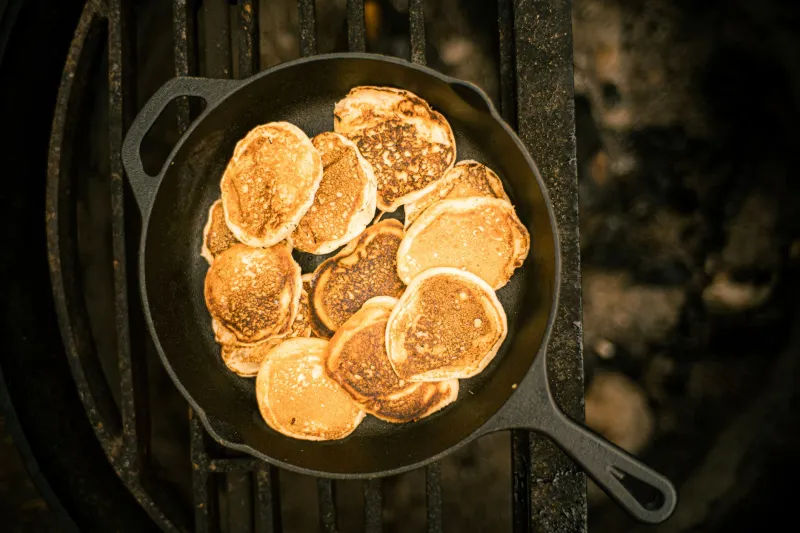
There's a skillet sitting in a cabinet in Decatur, Georgia, that hasn't seen a drop of water since 1987. Its surface is so dark and smooth it looks almost lacquered. It belonged to a woman named Ruth Ann Holcombe, who made cornbread in it every Sunday for fifty-two years. Her granddaughter, Priya, owns it now. Priya also owns a ceramic-coated nonstick pan she bought at Target for $34.99. She uses the nonstick pan almost every day. Ruth Ann's skillet hasn't moved.
"I feel guilty about it," Priya admits. "But honestly? I don't really know what I'm supposed to do with it. I'm scared I'll ruin it."
That fear — and the gap in knowledge behind it — is at the center of a quiet but meaningful shift happening in Southern kitchens right now. Cast iron cookware, once so fundamental to Southern cooking that it was listed in wills alongside land and jewelry, is losing its place in the daily rotation. And the skills needed to maintain it are disappearing right along with it.
More Than Just a Pan
To understand what's being lost, you have to understand what cast iron actually meant in a Southern household. It wasn't just a cooking vessel. It was a record of use. Every meal cooked in a well-maintained skillet added another microscopic layer of polymerized oil to its surface, building over years and decades into something that no factory coating can replicate.
"People don't understand that a seasoned cast iron skillet is essentially a living document," says Marcus Treadwell, a Birmingham-based culinary historian who has spent the last decade collecting and restoring antique Southern cookware. "When you cook in your grandmother's skillet, you are literally cooking in the same seasoning she built. That's not metaphor. That's chemistry."
Treadwell has collected over two hundred pieces of antique cast iron, many of them sourced from estate sales across Alabama, Mississippi, and Tennessee. He says the pieces he finds most often tell the same story: a skillet in perfect condition, clearly cared for through multiple generations, sitting in a box with a nonstick pan that's been scratched to pieces.
"The nonstick pan gets used until it's garbage, then it gets replaced. The cast iron just sits there. Nobody taught the next person what to do with it."
The Seasoning Gap
Seasoning cast iron is not complicated. It involves coating the pan in a thin layer of oil — flaxseed, vegetable, or lard are the traditional choices — and baking it in a hot oven until the oil bonds to the metal. Done right and repeated over time, it creates a naturally nonstick surface that gets better with age. Done wrong, or neglected, and you get rust, sticking, and a skillet that feels like more trouble than it's worth.
The problem is that "done right" has historically been transmitted person to person, not through a YouTube tutorial. Grandmothers showed daughters. Mothers showed sons. The knowledge lived in the hands and the habits of people who cooked with cast iron every day and corrected mistakes in real time.
That chain of transmission is broken in a lot of families now. Between smaller households, busier schedules, and the genuine convenience of modern cookware, fewer people are cooking the kind of daily, from-scratch meals that kept a cast iron skillet in constant use. And a skillet that doesn't get used doesn't get better — it gets neglected.
"Cast iron rewards consistency," says home cook and food blogger Dena Fuqua of Knoxville, Tennessee, who learned to use her great-aunt's skillet only after watching a series of online videos in her late twenties. "The whole reason my great-aunt's pan was so perfect was because she used it constantly. She made eggs in it every morning. She made cornbread in it three times a week. I cook maybe four times a week total. It's just a different life."
Dena eventually got her skillet into good shape, but she's clear-eyed about the fact that she had to learn the hard way — and that most people her age aren't going to bother.
What's Actually Being Lost
Set aside the romance of heirloom cookware for a moment. There are real, practical reasons to mourn this shift.
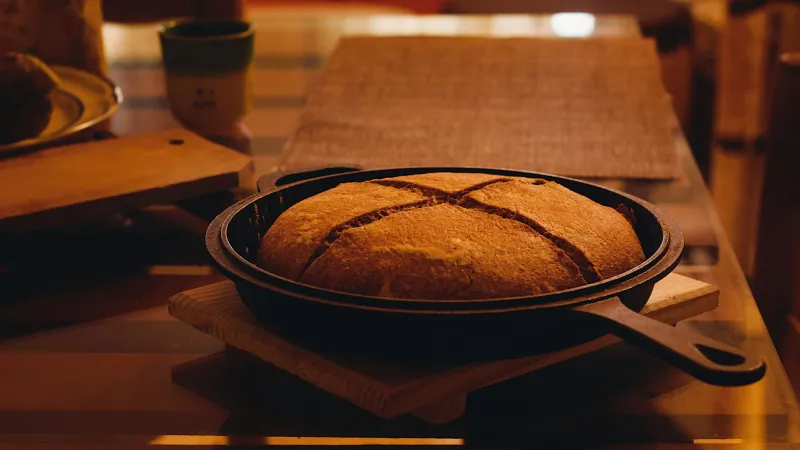
Cast iron holds and distributes heat differently than any modern alternative. It can go from stovetop to oven without a second thought. It adds a trace amount of iron to food — genuinely useful for people who run low on it. A properly maintained skillet will outlast any nonstick pan by decades, maybe centuries. And for certain Southern staples — cornbread with a crackled crust, pan-fried chicken with a deep golden sear, a skillet of sawmill gravy — nothing else really compares.
"There are things you simply cannot do in a nonstick pan," says Treadwell. "You can't get the crust on a pone of cornbread. You can't get the fond for a proper pan sauce. Those textures and flavors are cast iron flavors. When we lose the skill, we lose the food."
And there's something else, harder to quantify but just as real: the loss of a physical connection to the people who came before. A skillet passed through three generations carries actual traces of the food cooked in it. Using it is, in some small but genuine way, a form of memory.
Signs of a Turnaround
It's not all eulogy, though. There are signals — scattered but real — that younger Southerners are finding their way back to cast iron, often through exactly the kind of digital channels that bypassed the old person-to-person transmission.
Cast iron restoration has become a minor phenomenon on social media, with accounts dedicated entirely to rescuing rusted skillets from thrift stores and bringing them back to life. Heritage cast iron brands like Smithey Ironware, based out of Charleston, South Carolina, have built devoted followings among younger home cooks willing to spend serious money on American-made cookware that's built to last.
And in some families, the conversation is starting back up. Priya, the woman with Ruth Ann's skillet gathering dust in Decatur, recently called her mother and asked her to walk her through the seasoning process over the phone.
"She cried a little," Priya says. "She was so happy I asked. I think she assumed I just didn't care."
The skillet is back in rotation now. Priya made cornbread in it last month — her first attempt. She says it stuck a little. She's going to try again.
That's how it works. That's always been how it works. You cook in it, you learn from it, and eventually you pass it on. The question is just whether enough people are willing to start the conversation before the knowledge disappears entirely.